Leak under the slab, and you’d rather not have a jackhammer in your kitchen? Rerouting skips the floor entirely. Call or send a few details, and a local slab leak plumber will get back to you about whether a reroute fits your house.
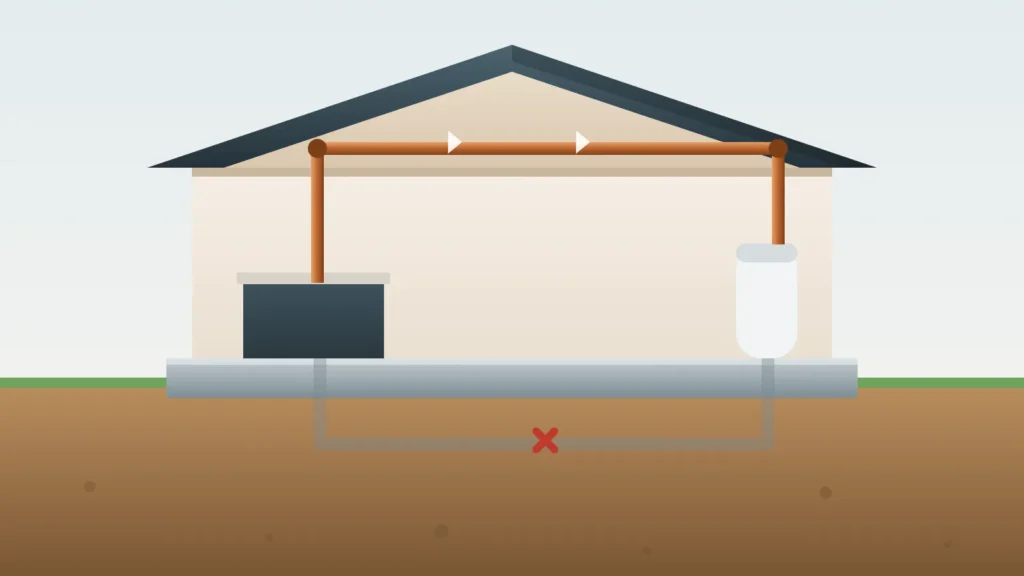
What a reroute is
The leaking pipe stays under the slab, capped off and out of service. A new line runs from where the water comes in to the fixture that pipe used to feed, through the attic or inside the walls. Your floors don’t get touched. Holes in drywall do, but drywall is a lot easier to patch than tile.
When a reroute makes sense
A reroute is often the better call when the leak is under something you don’t want torn up, like a kitchen island, cabinets, a tiled shower, or hardwood that runs through half the house. It also makes sense when one line has already leaked once. The pipe on either side of a leak is usually the same age and in the same shape, and a spot repair fixes one spot.
It’s a harder sell when the leak is in an easy place, like a garage or a closet with vinyl floor, and the rest of the plumbing is newer. Then opening the floor at the leak can be quicker and cheaper.
What to expect
Most reroutes take a day or two, depending on how far the new line runs and how many walls it crosses. The plumber will open some drywall to run the pipe, and you’ll want someone lined up to patch and paint. Ask whether the plumber handles that or leaves it to you. Ask too whether the work needs a city permit and who pulls it.
Hot water lines
Hot lines tend to leak under slabs before cold ones, and the hot line to the kitchen or a far bathroom is a common reroute. See hot water slab leaks.
Not sure whether to reroute or open the floor? Call or send the details and get a price on both.