Second slab leak in a few years, or the plumber keeps finding pinholes? Sometimes the cheapest fix is the whole system. Call or send a few details, and a local repipe plumber will get back to you with a price.
When a repipe beats another repair
One slab leak can be bad luck. Two usually means the pipe itself is wearing out, and the rest of it is the same age. Paying for detection, a floor opening, and new tile every time it happens adds up fast.
A repipe is worth a quote if any of these sound like your house:
- You’ve had more than one slab leak, or pinhole leaks in the walls.
- The house still has its original copper or galvanized pipe.
- Water pressure has dropped, or the water runs rusty for a few seconds.
- You’re about to remodel a kitchen or bath and the walls will be open anyway.
What a repipe involves
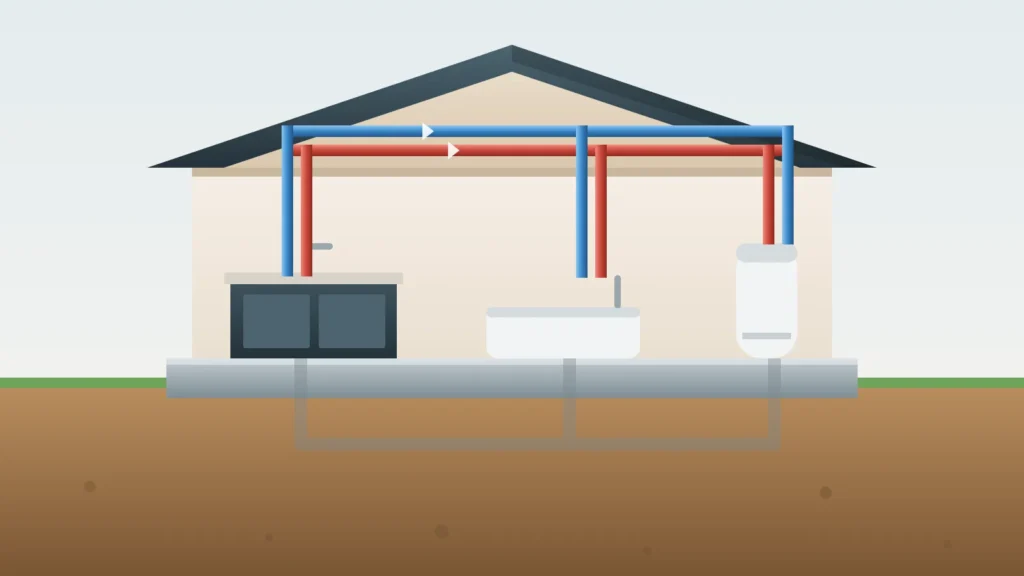
Like a reroute, a repipe runs new lines through the attic and walls instead of under the slab. The difference is it replaces all of them: every supply line from the main to each fixture, hot and cold. The old pipe under the slab gets abandoned.
Plan on a few days with the water off for part of each day, depending on the size of the house and how many bathrooms it has. There will be small openings in drywall at each fixture, and patching is either part of the job or a separate one. Ask up front.
PEX or copper?
Most repipes now use PEX, a flexible plastic line that goes in faster with fewer joints in the wall. Copper costs more and takes longer, and some homeowners still want it. Either one is a big step up from 40-year-old pipe sitting in wet soil. Ask the plumber what they’d use in your house and why.
Get it in writing
Ask what’s included: permits, drywall patching, the water heater connections, the main shutoff, and haul-off. And ask whether the price covers every fixture, including outside hose bibs and the fridge line.
Tired of chasing leaks? Call or send the details and get a repipe price.